
Japanese Minimal
Stillness as a Design Principle
Japanese Minimal design is not simply an aesthetic — it is a philosophy. Rooted in restraint, proportion and reverence for natural materials, this approach to luxury outdoor living prioritises calm over complexity and intention over embellishment.
In a world of overstimulation, a Japanese-inspired outdoor space offers something rare: quiet clarity.
At Liquid Haven, we interpret Japanese Minimalism through architectural precision — creating pools and outdoor environments that feel composed, grounded and deeply considered.
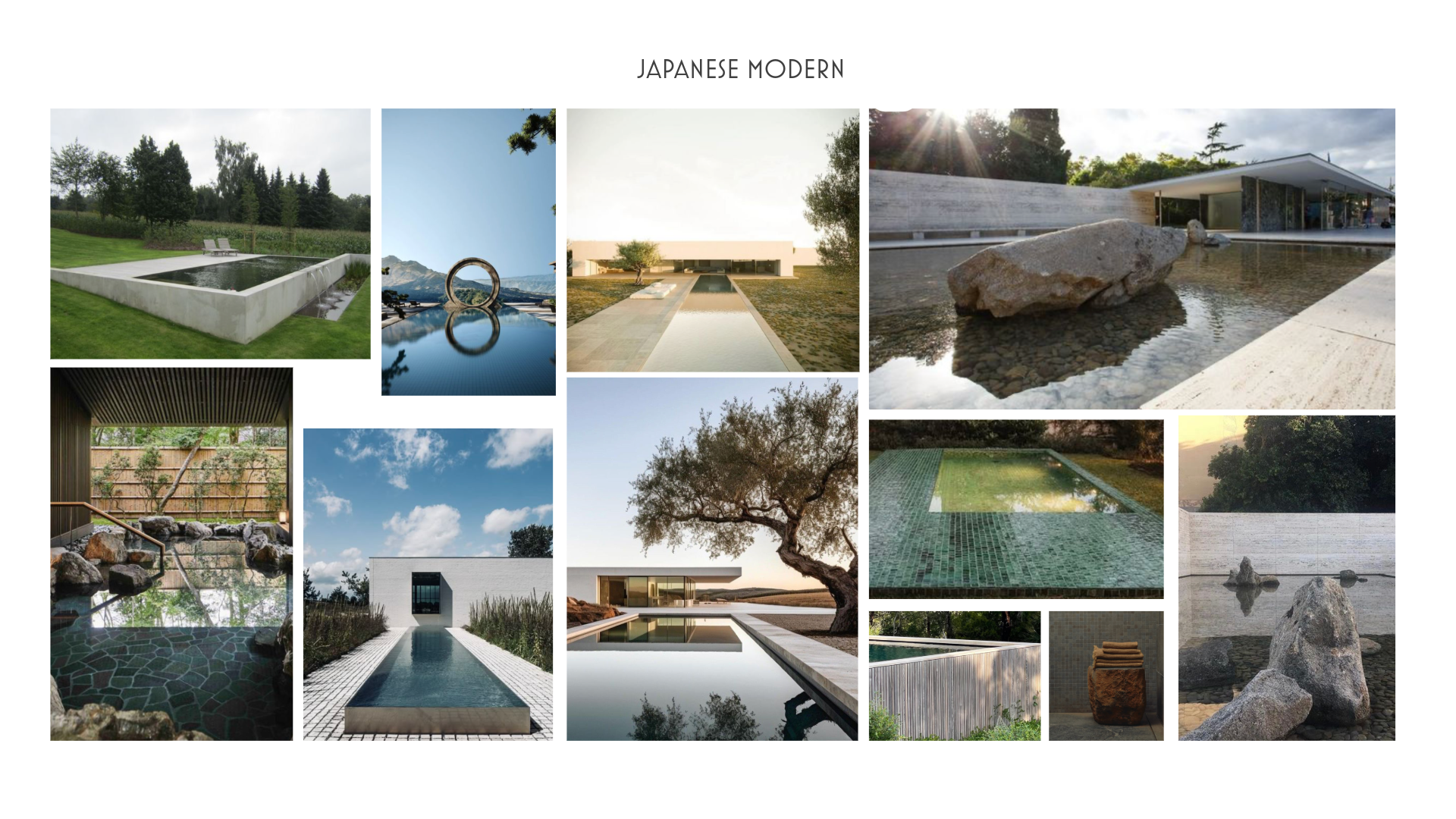
Japanese Minimal design is not simply an aesthetic — it is a philosophy. Stillness as a Design Principle
The Essence of Japanese Outdoor Design
This aesthetic is guided by three core principles:
Simplicity
Balance
Connection to nature
Every line serves a purpose. Every material has weight and honesty. Negative space is as important as the built form itself.
Rather than filling a landscape, Japanese Minimal design edits it — allowing water, stone and greenery to coexist without distraction.
Pool Design: Reflection Over Feature
In Japanese-inspired luxury pool design, water is contemplative rather than performative.
Key characteristics include:
Linear or perfectly rectangular pool forms
Dark interior finishes for reflective water
Knife-edge or clean coping details
Minimal step visibility
Precise alignment with architectural axes
The water often appears deep and mirror-like, reflecting sky, foliage and structure — becoming a dynamic surface of stillness.
Proportion is essential. The pool should feel integrated within the architecture, not applied to it.
Materials: Honest and Grounded
Materiality defines the success of this aesthetic.
Common selections include:
Honed concrete
Charcoal or basalt stone
Timber with visible grain
Natural aggregate finishes
Gravel or crushed stone beds
Surfaces are matte rather than polished. Texture is subtle, never decorative.
The palette remains restrained — deep greys, warm timbers, soft whites and moss greens — allowing the landscape and light to lead.
Landscaping: Sculptural Restraint
Planting within Japanese Minimal outdoor spaces is intentional and highly curated.
Often included:
Japanese maple or feature tree specimens
Bamboo used selectively
Clipped shrubs
Moss or gravel ground cover
Carefully placed feature stones
There is space between elements. Breathing room. The design invites pause.
Outdoor Living: Quiet Integration
Furniture and built elements remain minimal.
Low-profile seating
Timber decks with concealed fixings
Integrated benching
Subtle lighting concealed within architecture
Nothing dominates. The experience is immersive rather than decorative.
Why Japanese Minimal Resonates Today
Modern architectural homes pair naturally with this aesthetic. Its emphasis on geometry and structure complements contemporary design, while its focus on calm addresses the growing desire for wellness and retreat within the home.
For urban properties especially, Japanese-inspired outdoor spaces create privacy, sanctuary and psychological stillness.
The Liquid Haven Approach
Through careful spatial planning and 3D visualisation, we ensure:
Precise alignment between pool and architecture
Cohesive material selection
Seamless integration of structural elements
Balanced landscape composition
As licensed builders, we manage the structural integrity behind the simplicity — ensuring the clean lines you see are supported by disciplined construction beneath.
Japanese Minimal is quiet luxury at its most refined.